Bedroom Lighting Design Guide
How to light a bedroom, soft ambient, useful bedside, warm CCT, and why circadian thinking matters in the room you sleep in.
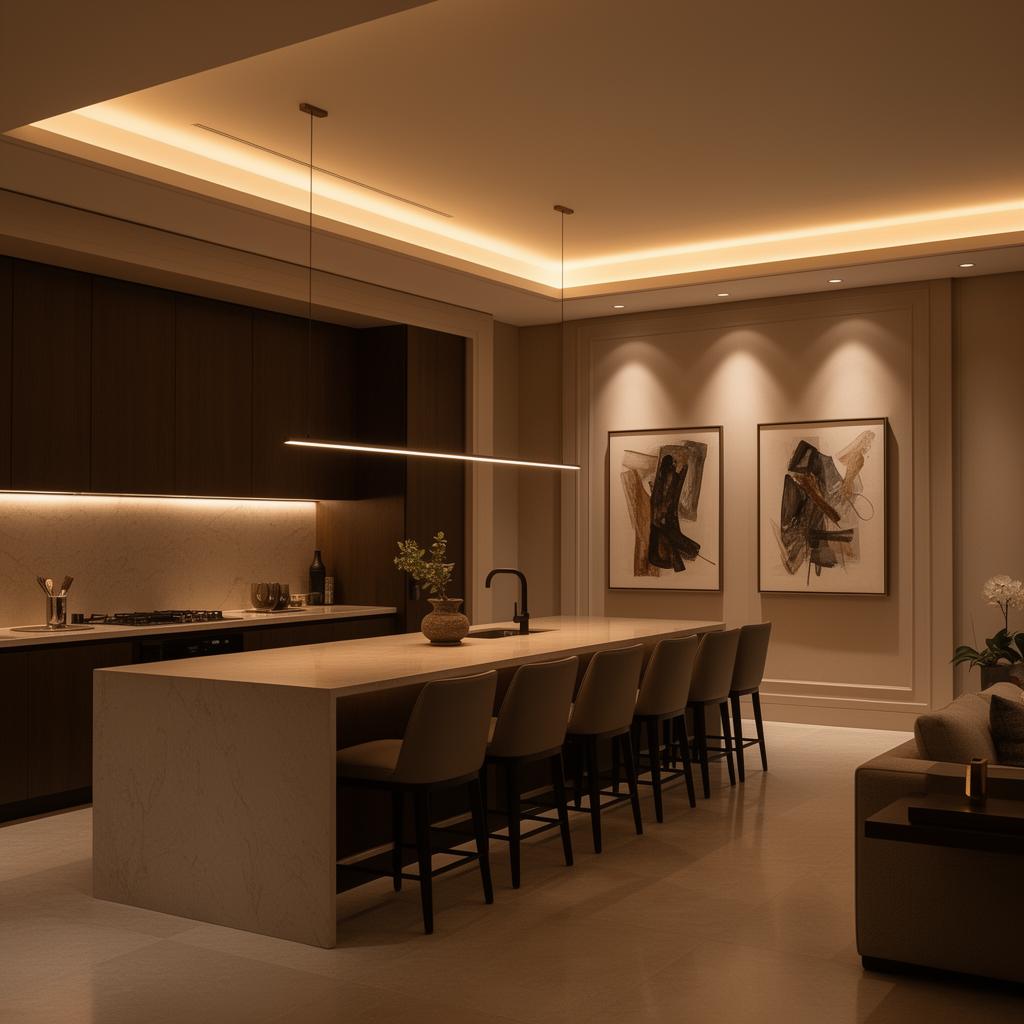
The Bedroom Problem
Most bedrooms are designed like living rooms, bright, cool, uniformly downlit. That is the opposite of what a bedroom should be.
Why It Matters
Light shapes sleep. Cool light at night suppresses melatonin. Glare from misplaced downlights ruins the room. The bedroom is the most circadian-sensitive room in the home.
Lux Targets
| Use | Recommended Lux |
|---|---|
| Ambient | 100–150 lux |
| Bedside reading | 300 lux at the page |
| Wardrobe interior | 300–500 lux |
| Night scene | 5–20 lux |
Layers That Actually Matter
- Soft ambient layer (cove, indirect, low-output downlights), never above the bed
- Independent bedside reading lights with their own dimming
- Wardrobe layer at higher lux, switched separately
- A very low night scene for safe movement after dark
Common Mistakes
- Downlight directly above the pillows
- 4000K in the bedroom
- Single circuit for the whole room
- Pendants over the bed without dimming
Professional Recommendation
Three minimum scenes, Bright, Evening, Night. CCT 2700K. Bedside reading on its own dimmer.
Lighting Intelligence by Alya
At Ashwamedha Design Solutions, this is part of our Lighting Intelligence practice, every recommendation is validated through DIALux simulation, lux calculations and visual comfort analysis before it reaches a construction site. Alya, our lighting intelligence platform, packages this thinking into reusable design tools.
Frequently Asked Questions
Should bedrooms be tunable white?+
Ideally, yes, 2700K in the evening, 4000K for getting ready in the morning. It supports circadian rhythm.
Are LED strips okay in a bedroom?+
Yes, used as cove or indirect ambient. Avoid raw exposed strips and choose CRI 90+.
Related Service
Residential Lighting Design
See how this thinking is applied on live projects.
Need help applying this to your project?
Our team can review your space and turn these ideas into a measured lighting design.