The 3 Layers of Lighting: Ambient, Task and Accent (Plus Decorative)
The three (plus one) layers every well-lit interior uses, why they exist, how to combine them, and the most common mistakes that flatten a space.
Introduction
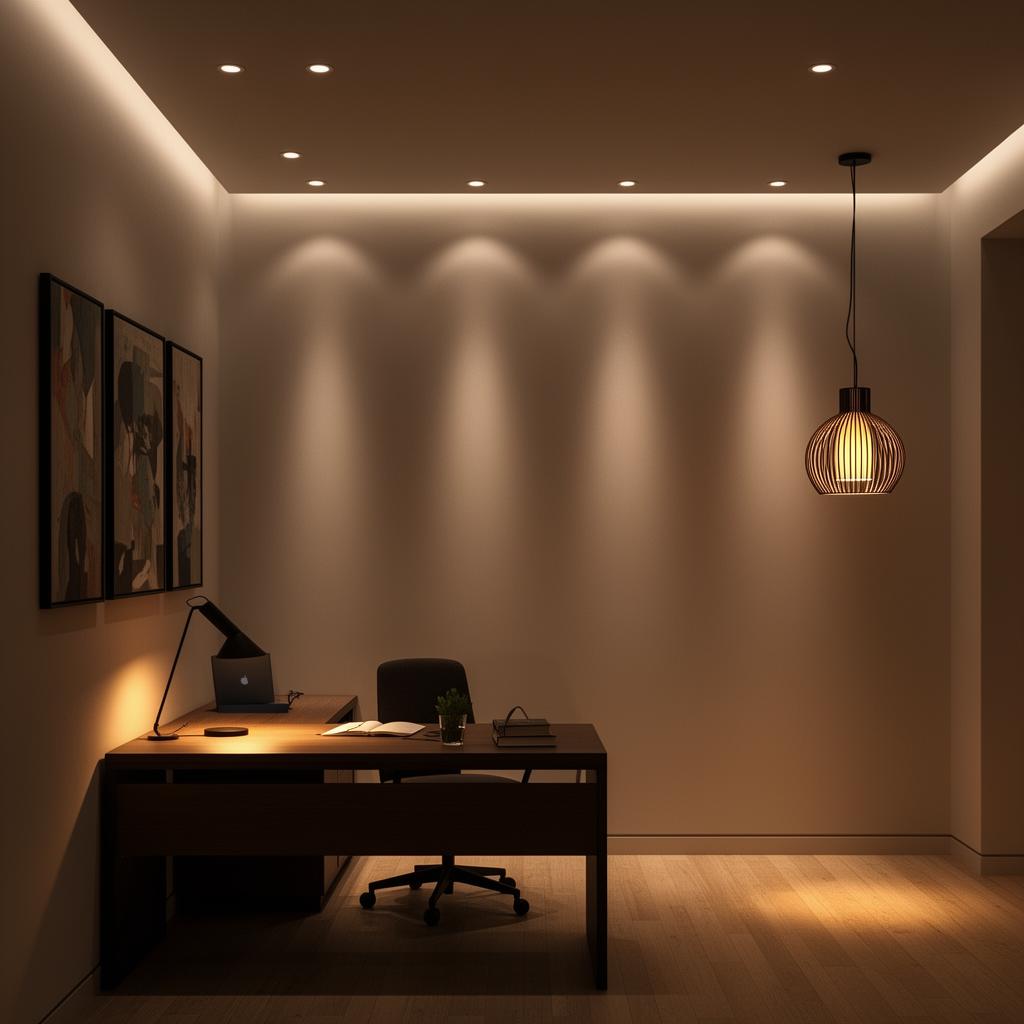
Ask a professional lighting designer to describe a well-lit room and the answer almost always begins with layers. Every considered interior in the world, from a boutique hotel lobby in Kyoto to a family villa in Bengaluru, works because it combines three foundational layers of light: ambient, task and accent. A fourth, decorative, sits on top as the visible jewellery of the room.
When rooms feel flat, glaring, cave-like or oddly institutional, the diagnosis is almost always the same: one layer is doing all the work. This guide unpacks each of the three layers of lighting in detail, shows how they combine, and explains how professional designers plan them from the first sketch rather than after the ceiling is closed.
Why Lighting Layers Exist
The human eye is remarkably adaptive but it reads a space through contrast, not absolute brightness. A single ceiling fixture, no matter how powerful, produces a uniform wash that gives the eye nothing to lock onto. Everything reads at the same visual weight. Depth disappears. Materials look one-dimensional. Faces flatten.
Layered lighting solves this. By combining a soft background of ambient light with focused pools of task and accent illumination, we recreate the natural hierarchy of daylight, where a bright window, a shaft on a table and the ambient glow of a room are always three distinct things, never one.
Layers are not about adding more fixtures. They are about giving the eye a reason to move through the space.
The Three Core Layers (Plus a Decorative Fourth)
| Layer | Purpose | Typical Tools | Typical Lux |
|---|---|---|---|
| Ambient | General background illumination | Downlights, coves, indirect uplight, cove-integrated linear | 75–200 lux |
| Task | Concentrated light at a working surface | Under-cabinet linear, desk lamps, bedside reading, vanity strips | 300–750 lux |
| Accent | Hierarchy, draws the eye to a moment | Adjustable spots, track, wall-grazing, picture lights | 3–10× ambient on the feature |
| Decorative | The fixture itself is the design object | Pendants, sconces, chandeliers, sculptural lamps | Contribution, not workhorse |
1. Ambient Lighting
Ambient light is the floor of the composition, the comfortable general illumination that lets the eye read the room safely. It should be present but never dominant. In residential interiors we typically target 100–200 lux on the horizontal plane for living areas, delivered through downlights on a wide beam, indirect coves, or a combination of the two.
Good ambient light is soft, uniform enough to avoid dark holes, and almost invisible. When guests walk in and immediately notice the ambient layer, it is usually too bright or too cold. See our residential lighting design service for how we calibrate ambient levels per room in villas and apartments.
2. Task Lighting
Task lighting is concentrated illumination delivered exactly where visual work happens: kitchen counters, desks, bedside reading, bathroom mirrors, workbenches, dining tables. Task light is bright, focused, and independently switched or dimmed from ambient. Under-cabinet linear at 3000K on a kitchen counter is task light. A pendant hung 800mm above a dining table is task light dressed as decoration.
The most common residential mistake is trying to use ambient downlights to do task work. A ceiling downlight above a kitchen island still leaves shadows on the counter directly below the person standing there, because their own body blocks the beam. Task light needs to come from below, in front, or beside the user, not directly overhead.
3. Accent Lighting
Accent light creates hierarchy. It tells the eye where to look first. A narrow-beam adjustable spot on a piece of art, a grazing linear on a stone feature wall, a downlight aimed at a console vignette, these are the accents that make a room feel curated instead of merely functional. The rule of thumb: accent should be three to five times brighter than the ambient on the same surface for a residential setting, and up to ten times brighter in premium retail or gallery contexts.
Accent lighting is where our commercial lighting design service invests heavily in retail and showroom projects: without accent, product simply does not sell.
4. Decorative Lighting
Decorative fixtures, the pendants, sconces and chandeliers people notice first, are the jewellery. They contribute mood and character but rarely do the heavy lifting of ambient or task. Pair every decorative fixture with a concealed source that actually lights the space; treat the decorative one as sculpture that happens to glow.
How the Layers Combine, in Practice
A well-designed living room in a Bengaluru villa might combine: cove-integrated linear at 3000K providing 120 lux of ambient wash across the ceiling, adjustable spots aimed at the artwork above the sofa at 600 lux (a 5:1 accent-to-ambient ratio), a floor lamp beside the reading chair delivering 300 lux at the book, and a decorative pendant over the coffee table dimmed to 20% purely for atmosphere. Four fixtures, four intents, four independent dimming circuits. The room reads as a designed environment, not an illuminated box.
The same principle scales to hospitality. Our hospitality lighting design service treats every guest-facing zone, lobby, restaurant, corridor, guest room, as a distinct layered composition, because guest experience is measured in contrast and comfort, never in raw lux.
Common Mistakes
- Designing only ambient. The room reads flat and hospital-like.
- Using decorative pendants as the primary task light. They are jewellery first.
- Putting every layer on a single switch. Layers only work when they can be dimmed independently.
- Specifying accents without contrast. Accent at the same level as ambient does not accent anything.
- Uniform ceilings of identical downlights, evenly spaced, at one beam angle. This is not lighting design; it is grid drilling.
Professional Recommendation
Target at least three layers per habitable room, each on an independent dimming circuit. The lowest-cost intervention with the biggest visible impact is not more fixtures. It is splitting circuits so the layers you already have can breathe.
Lighting Intelligence by Alya
At Ashwamedha Design Solutions, this is part of our Lighting Intelligence practice, every recommendation is validated through DIALux simulation, lux calculations and visual comfort analysis before it reaches a construction site. Alya, our lighting intelligence platform, packages this thinking into reusable design tools.
Frequently Asked Questions
What are the three layers of lighting?+
Ambient (general background), task (concentrated light for visual work), and accent (focal illumination that creates hierarchy). A fourth, decorative, is often added as the visible jewellery of the room.
Do all rooms need all three layers?+
No. A short corridor may only need ambient and a light accent. A living room, kitchen or hospitality lobby benefits from all three plus decorative. Match layers to the function of the space.
What is the right accent-to-ambient ratio?+
Residential and hospitality: 3:1 to 5:1 on the featured surface. Premium retail, jewellery and gallery contexts: 10:1 or higher.
Can one fixture do more than one layer?+
Rarely, and never well. A pendant dimmed low is atmosphere, not task light. A downlight bright enough for task is glare-inducing as ambient. Assign one intent per fixture.
Where do decorative fixtures fit?+
They are the visible jewellery, but pair every decorative fixture with a concealed source that does the actual lighting. Never rely on decorative alone.
Are lighting layers different in commercial spaces?+
The principle is identical; the ratios shift. Offices lean heavily on ambient with controlled UGR, retail lives on accent-to-ambient contrast, hospitality prioritises decorative and low-glare ambient. The layered thinking is universal.
Related Service
Lighting Intelligence
See how this thinking is applied on live projects.
Need help applying this to your project?
Our team can review your space and turn these ideas into a measured lighting design.