Residential
The Hidden Role of Lighting in Luxury Residential Interiors
The most luxurious homes rarely feel brightly lit. They feel calm, legible and responsive because the lighting has been designed around materials, people and everyday rituals.
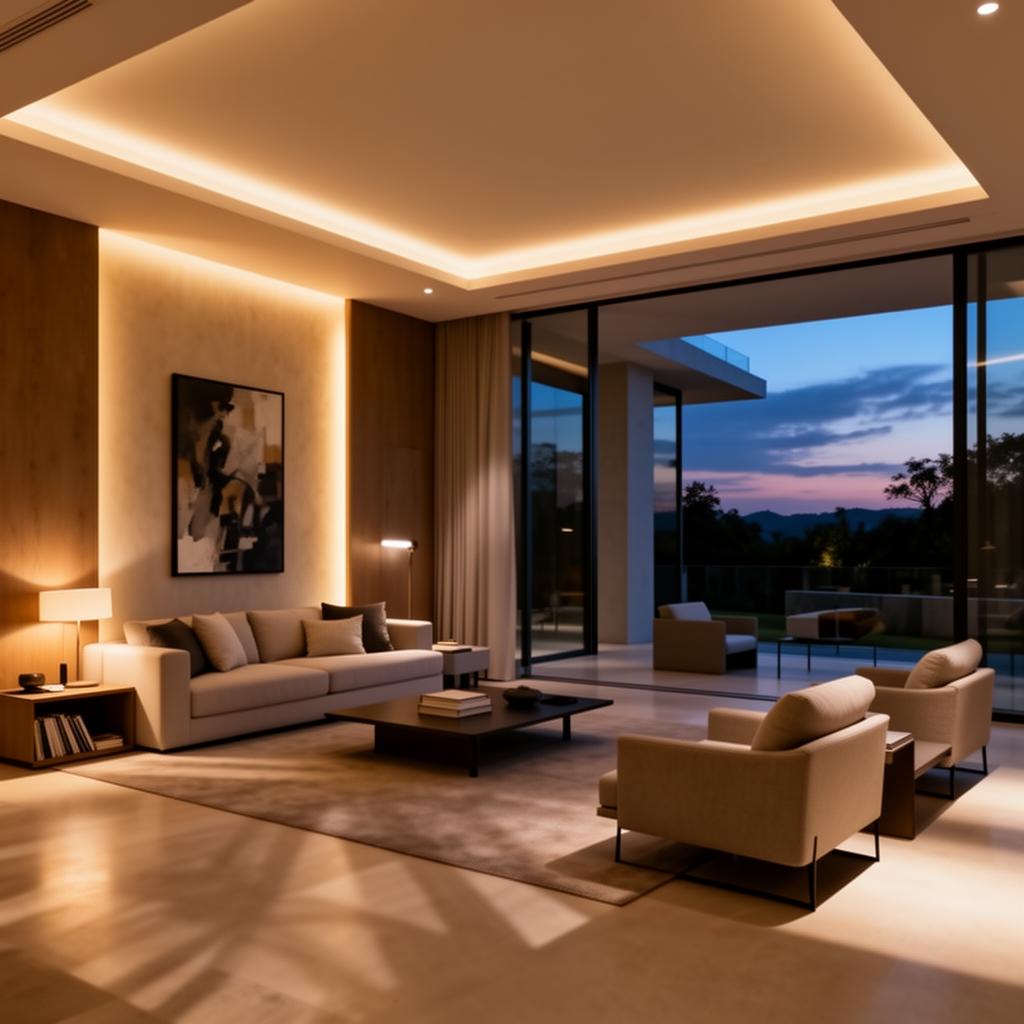
Luxury is rarely a question of how many light fixtures a room contains.
In fact, the more considered the interior, the less the lighting should feel like a catalogue of fixtures. It should feel calm, precise and almost inevitable. You should notice the timber, stone, art, fabric, proportions and people before you notice the equipment creating the light.
This is the hidden role of lighting in a luxury residence. It does not merely illuminate the interior. It protects the design intent, supports the way the home is lived in and gives every material the conditions it needs to look its best.
Luxury lighting begins with restraint
A common mistake in high-end homes is to equate luxury with brightness.
The ceiling becomes crowded with downlights. Every niche receives a linear profile. Every wall receives a decorative fixture. The chandelier, cove, spotlights and joinery lights are all switched on together. The result may be expensive, but it rarely feels luxurious.
Luxury lighting is selective.
It knows which wall deserves attention and which one should recede. It allows a decorative luminaire to become a focal point without surrounding it with visual noise. It creates enough darkness for a pool of light to feel meaningful. It gives the eye a clear sequence rather than asking every detail to perform at once.
The value lies in judgement, not quantity.
Learn more about layered lighting.
Light is what makes material quality visible
Premium materials are chosen for their grain, depth, texture, colour and craft. Yet the wrong light can make them look flat, dull or artificial.
Stone needs a direction of light that reveals its texture without creating uncontrolled reflections. Timber needs colour quality that preserves its warmth and variation. Artwork needs a beam that is placed and shaped for the actual size of the piece. Fabrics need soft light that gives them volume. Metallic finishes need careful control because even a small source can produce a harsh highlight.
Colour temperature matters, but it is only one part of the decision. Two 3000K luminaires can render the same material very differently because of spectrum, colour consistency, optics and dimming behaviour.
A good residential specification therefore considers:
- Colour rendering and colour fidelity
- Beam quality and edge softness
- Glare control
- Dimming compatibility
- Consistency between luminaires
- The distance and angle between the source and the material
- How the material changes between day and night
The objective is not to make every finish glow. It is to let each finish retain its character.
The home is a sequence of rituals
A residence is not occupied like an office. It changes hour by hour and room by room.
The same living room may be used for conversation, television, reading, entertaining, cleaning and quiet time. A bedroom needs a different visual atmosphere when someone is dressing, reading, entering late at night or preparing to sleep. A kitchen must support precise work, but it may also be visible from a softer dining or living zone.
One lighting scene cannot serve all of these moments well.
Luxury residential lighting is designed around rituals:
- Arriving home
- Welcoming guests
- Eating together
- Reading
- Watching television
- Getting ready
- Moving at night
- Displaying art or collections
- Entertaining outdoors
- Cleaning and maintenance
When these activities are understood early, the lighting can be divided into meaningful circuits and scenes. Without that thinking, even an expensive control system becomes a complicated way of switching everything on and off.
Learn more about how to light a villa.
Faces matter more than ceilings
People often experience residential lighting through the ceiling plan. The designer and client look at reflected ceiling drawings, fixture alignments and decorative positions.
The human experience happens elsewhere.
We see faces, walls, objects, artwork, curtains, joinery and the surfaces around us. A room with adequate light on the floor can still feel uncomfortable if faces are shadowed and walls are dark. A ceiling full of narrow downlights can create bright circles on the floor while leaving the room visually harsh.
Vertical light is one of the quiet differences between ordinary and considered residential lighting.
Soft light on a wall can make a room feel brighter without increasing glare. Light on curtains can give depth to a window after dark. A concealed source within a shelf can reveal objects and improve the visual balance of the room. Well-positioned light near a mirror can illuminate the face instead of only the top of the head.
The goal is not to remove all shadow. It is to create a flattering and legible relationship between people and the space.
Darkness is part of the interior palette
A luxurious home should not feel equally bright everywhere.
Darkness creates privacy, softness and depth. It allows the view outside to remain visible. It reduces reflections on glazing. It gives decorative light and candlelight room to exist. It helps the body understand that the day is slowing down.
This is especially important in double-height spaces, open-plan homes and residences with large glazed areas. If every plane is brightly illuminated, the interior can feel exposed and visually restless.
Controlled darkness can be used to:
- Separate foreground from background
- Reduce the prominence of circulation zones
- Frame an artwork or architectural element
- Protect views through glass
- Create a low-level late-night scene
- Make social spaces feel more intimate
The question is not whether a dark area is allowed. The question is whether it is intentional and safe.
Good lighting is often physically invisible
The most seamless residential lighting requires detailed coordination.
A wall washer needs the correct setback and spacing. A recessed downlight needs enough ceiling depth. A concealed profile needs a clean extrusion detail, heat management and service access. A wardrobe light needs a sensor position that does not produce false triggering. A pendant needs structural support and a ceiling rose detail. A driver needs ventilation and a location that can be reached without damaging the joinery.
These decisions are not visible in the final photograph, but they determine whether the lighting looks refined or improvised.
Late coordination often leads to:
- Fixtures placed too close to walls
- Random cut-outs after the ceiling is complete
- Visible drivers and wiring
- Linear light reflected as dots on polished surfaces
- Misaligned beams
- Inaccessible equipment
- Multiple colour temperatures in one visual field
- Dimming that flickers or drops out at low levels
Luxury is not only the visible result. It is also the absence of these unresolved details.
Controls should simplify the home
A control system should make the lighting easier to use, not turn the wall into a technical dashboard.
The user should not need to remember which of eight buttons controls the curtain light and which one controls the artwork. Scenes should be named around experience, such as Welcome, Entertain, Dinner, Relax, Night and All On.
A considered system may combine:
- Scene keypads
- Dimming
- Occupancy or door sensors in selected areas
- Time-based exterior control
- Bedside master control
- Integration with curtains or home automation
- A cleaning scene with higher general illumination
- A low-level movement scene for late night
The final step is commissioning. Light levels and scene balances should be adjusted in the completed space, with furniture, artwork and materials in place. A scene programmed only from drawings is rarely the final scene the home needs.
Decorative lighting is not the entire lighting design
Decorative luminaires can add scale, identity and beauty. They may become part of the interior language and carry emotional value for the client.
But they should not be expected to perform every technical task.
A chandelier may create a focal point without providing comfortable light on the dining table. A bedside pendant may be beautiful but unsuitable for reading. A wall light may create atmosphere while leaving a corridor uneven. A sculptural fixture may be the visual centre of a room, yet require concealed architectural light to support the surrounding surfaces.
The decorative and architectural layers should strengthen each other.
When they compete, the room feels busy. When they are coordinated, the decorative object can be seen clearly without being forced to illuminate the entire space.
Each room needs its own logic
A lighting language can remain consistent across the home, but the solution should not be copied room to room.
Living room
The living room needs flexibility. It may combine soft vertical light, adjustable accent lighting, a decorative focal point, low-level joinery light and task light near reading positions. Television viewing needs lower contrast and reduced reflections.
Dining room
The table is the centre of the scene. Light should support food, faces and the material of the table without causing glare. Dimming is essential because a family breakfast and a formal dinner need different brightness.
Kitchen
The worktop, sink and hob need task light that is not blocked by the person working. General ceiling light alone often creates shadows exactly where precision is needed. Open kitchens also need a softer scene when the work is complete.
Bedroom
The bedroom needs calm ambient light, reading light, wardrobe light, mirror light and a low-level path for night movement. Controls should be reachable from the bed and entrance.
Bathroom
The mirror needs light on the face, not only overhead. Wet-area safety, glare, reflection and colour quality matter. A night scene can prevent the bathroom from becoming painfully bright during late-night use.
Staircase and circulation
Safety is essential, but high brightness is not. Integrated handrail, wall, step or low-level light can guide movement without turning circulation into the brightest part of the house.
Learn more about lux levels.
The lighting consultant protects the complete experience
In a luxury residence, the lighting connects architecture, interiors, electrical design, automation, landscape and human use. No single fixture schedule can hold all of that together.
A dedicated lighting consultant develops the visual hierarchy, calculates performance, coordinates details, specifies equipment, prepares circuits and scenes, reviews samples, supports execution and commissions the final result.
This is not an additional layer of decoration. It is the discipline that makes all the other design investments visible after sunset.
Learn more about residential lighting design.
A luxury home should feel responsive, not staged
The best residential lighting does not force the same photograph-ready mood onto every moment.
It gives the home range.
It can be generous when guests arrive, focused when someone reads, precise when food is prepared, quiet when the evening slows down and almost invisible when the family moves at night.
That responsiveness is what makes the lighting feel personal. The home does not simply look expensive. It feels understood.
Designing a residence where the lighting needs to be part of the architecture?
Ashwamedha Design Solutions works with homeowners, architects and interior designers to develop complete residential lighting systems, from early concepts and calculations to specifications, controls, site coordination and commissioning.
start a consultationFrequently asked questions
What colour temperature is best for luxury residential lighting?
Warm white between 2700K and 3000K is most commonly used in living, dining and bedroom areas of luxury homes because it supports a calm atmosphere and flatters most residential materials. The final choice should be coordinated with finishes, daylight levels, decorative fixtures and intended mood.
How many lighting layers does a luxury living room need?
A luxury living room typically needs four to five layers: ambient or vertical light to establish the space, task light for reading, accent light for artwork or architecture, integrated joinery light and a decorative layer. Each layer should have independent control and a clear purpose.
Is home automation necessary for good residential lighting?
No. Good residential lighting can be achieved with well-planned circuits and dimmers. Home automation becomes valuable when it simplifies multiple scenes, automates lighting based on time or occupancy, or integrates with other home systems — but it does not replace good lighting design.
What makes luxury residential lighting different from standard residential lighting?
Luxury residential lighting prioritises restraint, quality of light and material interaction over fixture count. It uses fewer, better-positioned sources, specifies higher CRI for accurate colour rendering, controls contrast carefully and creates lighting that feels designed rather than installed.
Who designs luxury residential lighting in India?
Ashwamedha Design Solutions provides luxury residential lighting design across India, with specialisation in villas, apartments and farmhouses. Our process covers concept, lux calculation, fixture specification, BOQ and on-site supervision from Bangalore and Dehradun.